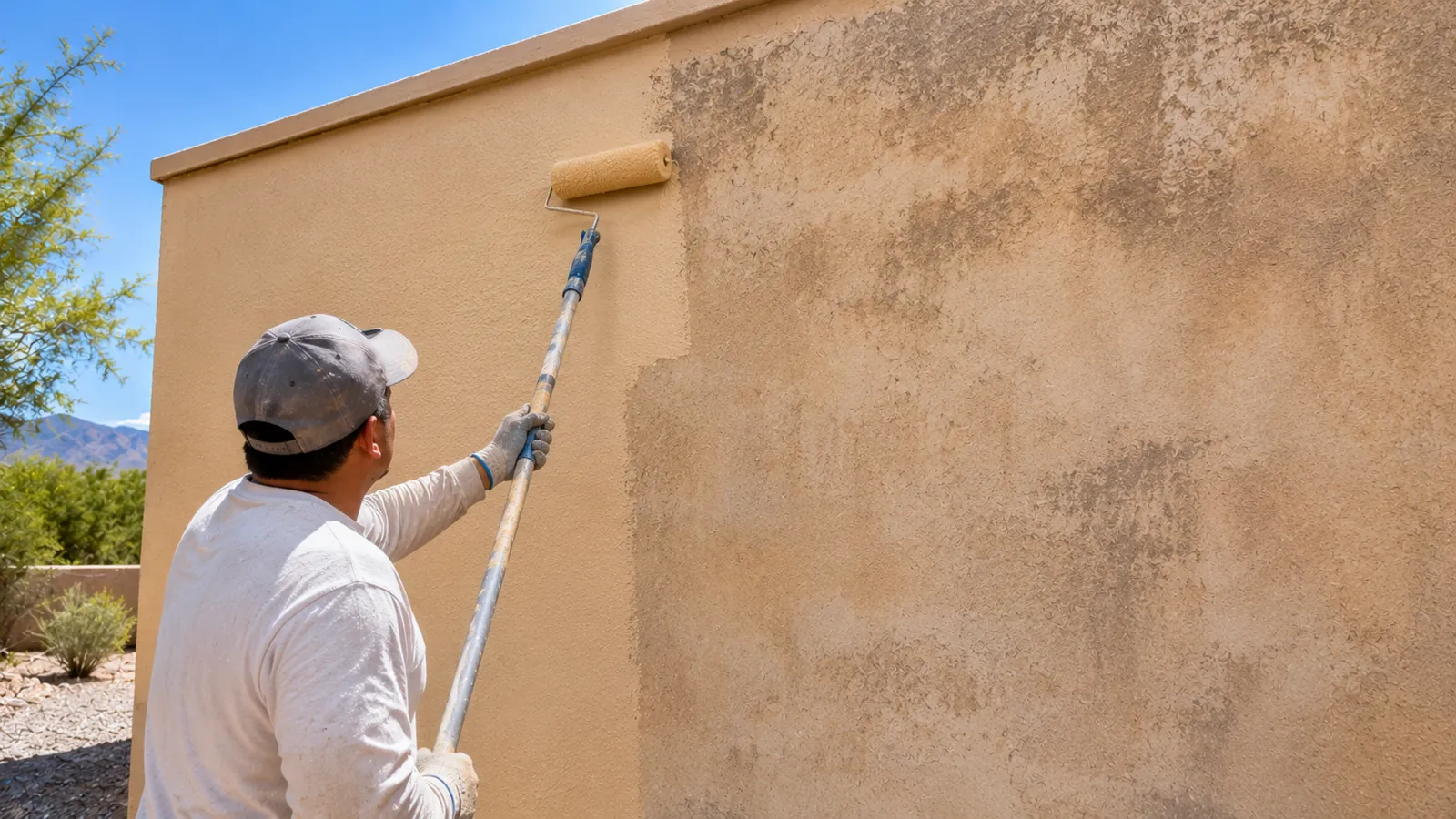
What elastomeric is
Elastomeric coating is a heavy-bodied acrylic applied much thicker than regular paint. Once cured, it forms a stretchy film that can expand and contract with the wall. That flexibility lets it bridge hairline cracks and keep wind-driven rain from getting into them.
Where it shines
- Sound, dry stucco walls with lots of fine map cracking
- Houses that need a color change and crack protection at the same time
- Exposed west and south walls that take the most weather
Where it can hurt
Elastomeric breathes much less than cement stucco. If a wall is already holding moisture from a leak, poor drainage or a buried weep screed, a heavy coating can slow drying and make the problem worse. It also doesn't fix structural cracks or loose stucco; it just covers them. And once a wall is coated, going back to a breathable cement finish later means more prep.
Elastomeric vs. a color coat
| Elastomeric coating | Cementitious color coat | |
|---|---|---|
| Crack bridging | Excellent for hairlines | Limited |
| Breathability | Low | High |
| Look | Painted finish, slightly smooths texture | True stucco texture |
| Best on | Dry, sound walls with fine cracks | Traditional stucco needing a refresh |
Our approach
We check moisture and drainage before recommending any coating. If the wall is dry and the cracks are fine, elastomeric can be a great choice. If there's any sign of water behind the stucco, we fix that first, and we often recommend a breathable finish instead. See color coat and elastomeric services.
Questions we hear
Can elastomeric go over synthetic stucco?
Often yes, with the right primer, but check compatibility first. Many acrylic finishes are better recoated with a matching acrylic finish.
Does elastomeric stop all leaks?
No. It keeps rain out of fine surface cracks. It won't fix failed flashing, parapets or drainage.
How thick is it applied?
Much thicker than regular paint, following the manufacturer's coverage rates. Applying it too thin is a common reason it fails.