The patches we do most
- Holes left after removing satellite dishes, light fixtures, hose bibs, vents and swamp cooler lines
- Impact damage from cars, trailers, ladders and lawn equipment
- Stucco cut back around replaced windows and doors
- Openings left by plumbing, electrical and HVAC work
- Crumbling stucco at the base of walls and corners
- Old patches that cracked around the edges or never matched the color
Why patches fail, and how we avoid it
A stucco patch fails when it doesn't bond to the old stucco, when it's built in one thick blob instead of layers, when it dries too fast in our sun, or when it's the wrong material for the wall. A rigid cement patch on a flexible synthetic finish, for example, will crack around its outline within a couple of years.
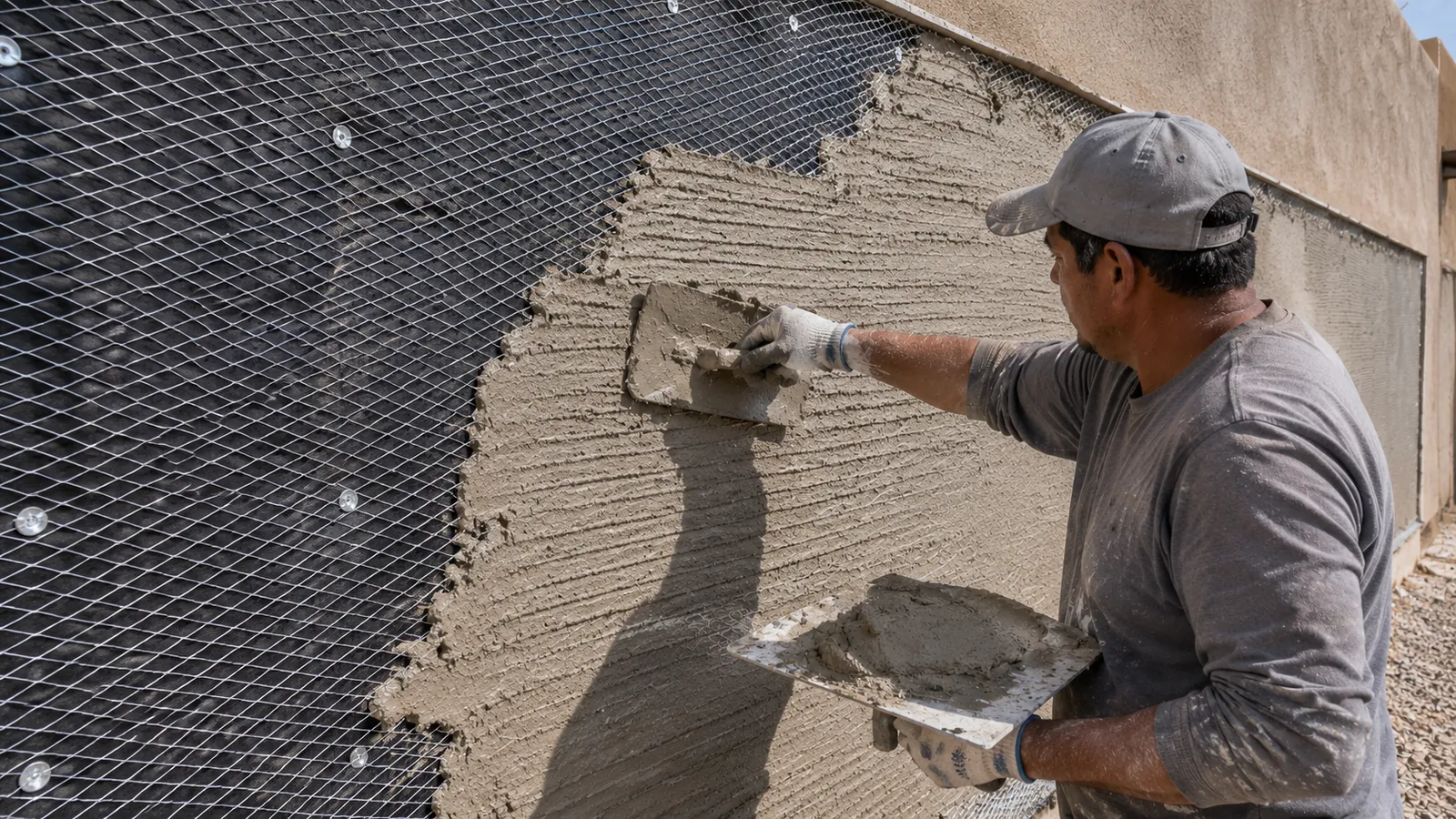
Our patches start by cutting the damaged area back to solid stucco in a clean shape. If the paper and lath behind it are damaged, they're replaced and lapped into the existing layers so water sheds correctly. Then the patch is built in coats, each one cured before the next, with the edges keyed into the old stucco. In summer we mist the patch and work in the cooler part of the day so it doesn't dry out before it cures.
Making it match
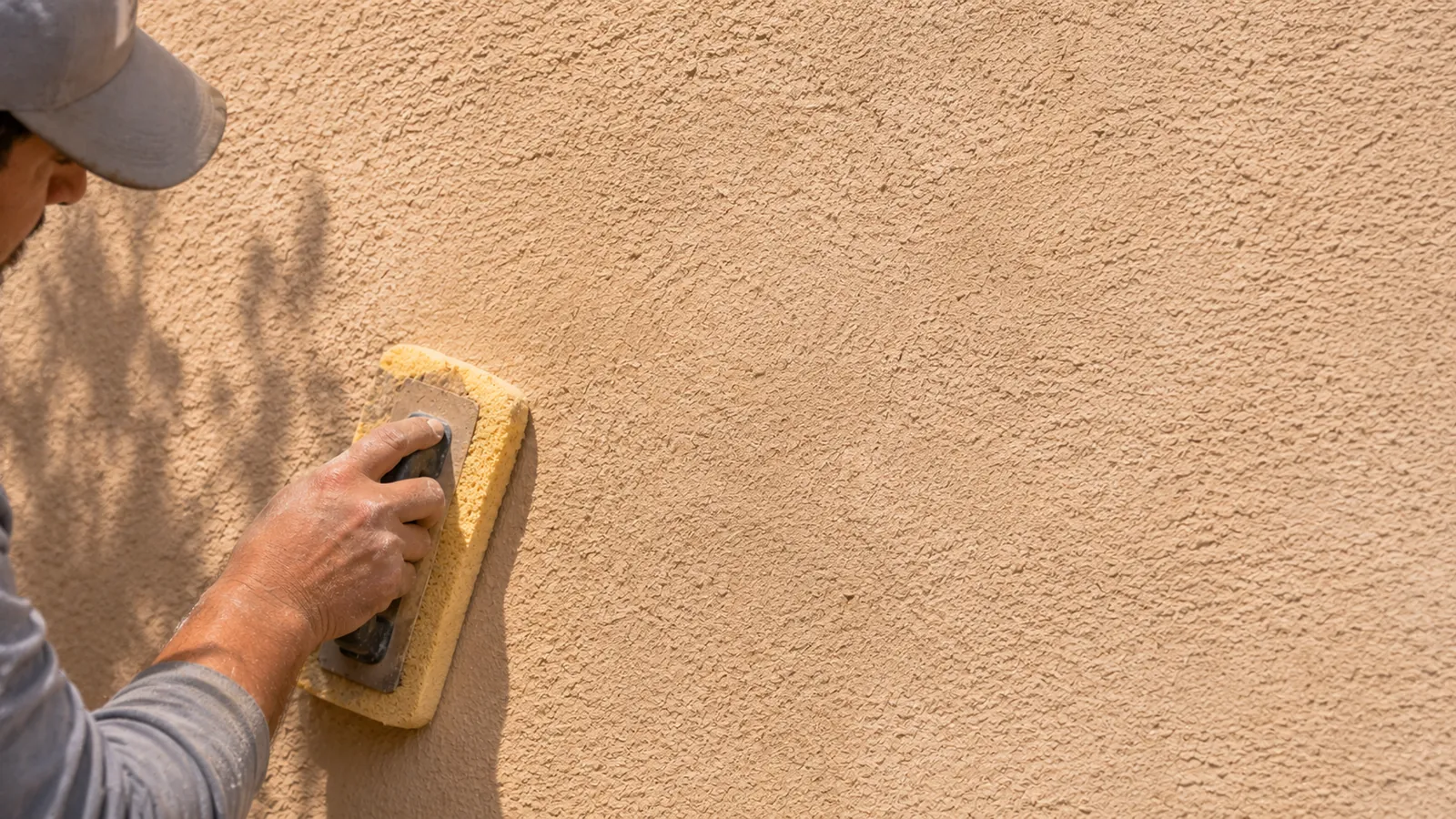
Texture is matched by hand on a test spot. Color is matched to the wall as it looks today, not as it looked when the house was new. If the wall is badly faded or already has several mismatched patches, we'll suggest carrying the color coat across the whole wall. It costs more than a spot patch, but it's the difference between a patch you notice every day and one you never see again.
Patching around new windows and doors
When a window or door is replaced full-frame on a stucco house, the stucco around the opening is cut back. Patching that correctly means flashing tied into the new window, new paper and lath lapped the right way, and stucco rebuilt in layers. We do this kind of patch all the time, whether we did the window or someone else did.
Questions we hear
How big a hole can you patch?
Anything from a nail hole to an entire section of wall. Beyond a certain size it becomes a partial re-stucco of that wall, which we'll explain in the quote.
Can you fix someone else's bad patch?
Yes, and we do it often. We cut the old patch out to solid stucco and rebuild it properly.
How long before a patch can be painted or color-coated?
It depends on the material and the weather. Cement patches need curing time before the finish goes on. We schedule the color coat accordingly so it doesn't crack or discolor.