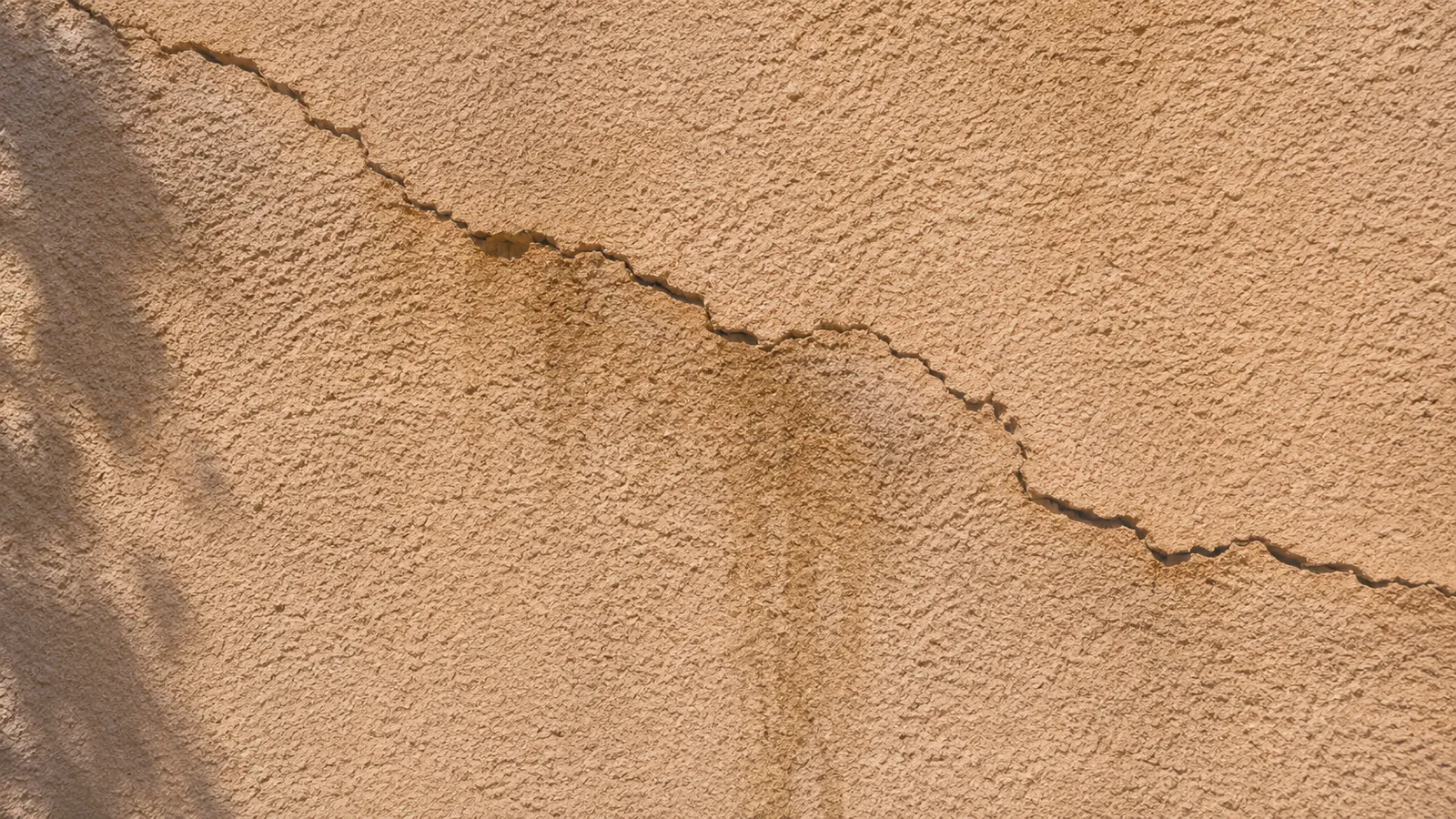
Why stucco cracks at all
Stucco is a thin, hard shell over a house that moves. Lumber shrinks as it dries, temperatures swing, soils swell and settle, and the stucco itself shrinks a little as it cures. Some cracking is normal and expected, which is why good stucco work includes control joints to give the wall somewhere to move.
A field guide to cracks
Hairline and map cracks
Fine cracks in a random web pattern, usually from shrinkage while curing. Mostly cosmetic. Worth sealing with a color coat or an elastomeric coating so water can't use them.
Diagonal cracks from window and door corners
Very common. Stress concentrates at the corners of openings. Fix the crack, and check the window flashing, because water often follows the crack inward.
Long horizontal cracks
Can follow the line between floors, sheathing joints or where stucco meets a different material. Sometimes a sign the stucco is starting to separate. Tap along it; if it sounds hollow, it needs more than a surface fix.
Vertical cracks at additions
Where a garage conversion or addition meets the original house, the two parts move independently. These cracks come back unless a control joint is added.
Stair-step cracks and cracks wider at one end
On block walls, cracks that step along mortar joints, or any crack that's noticeably wider at one end, can point to foundation movement. Watch for sticking doors and windows nearby. We repair the stucco; for active foundation movement, an engineer should take a look.
Warning signs
- Width you can fit a credit card into
- Growth over a season
- Stains, rust or efflorescence (white powder) around the crack
- Hollow sound or bulging nearby
- Doors or windows that started sticking around the same time
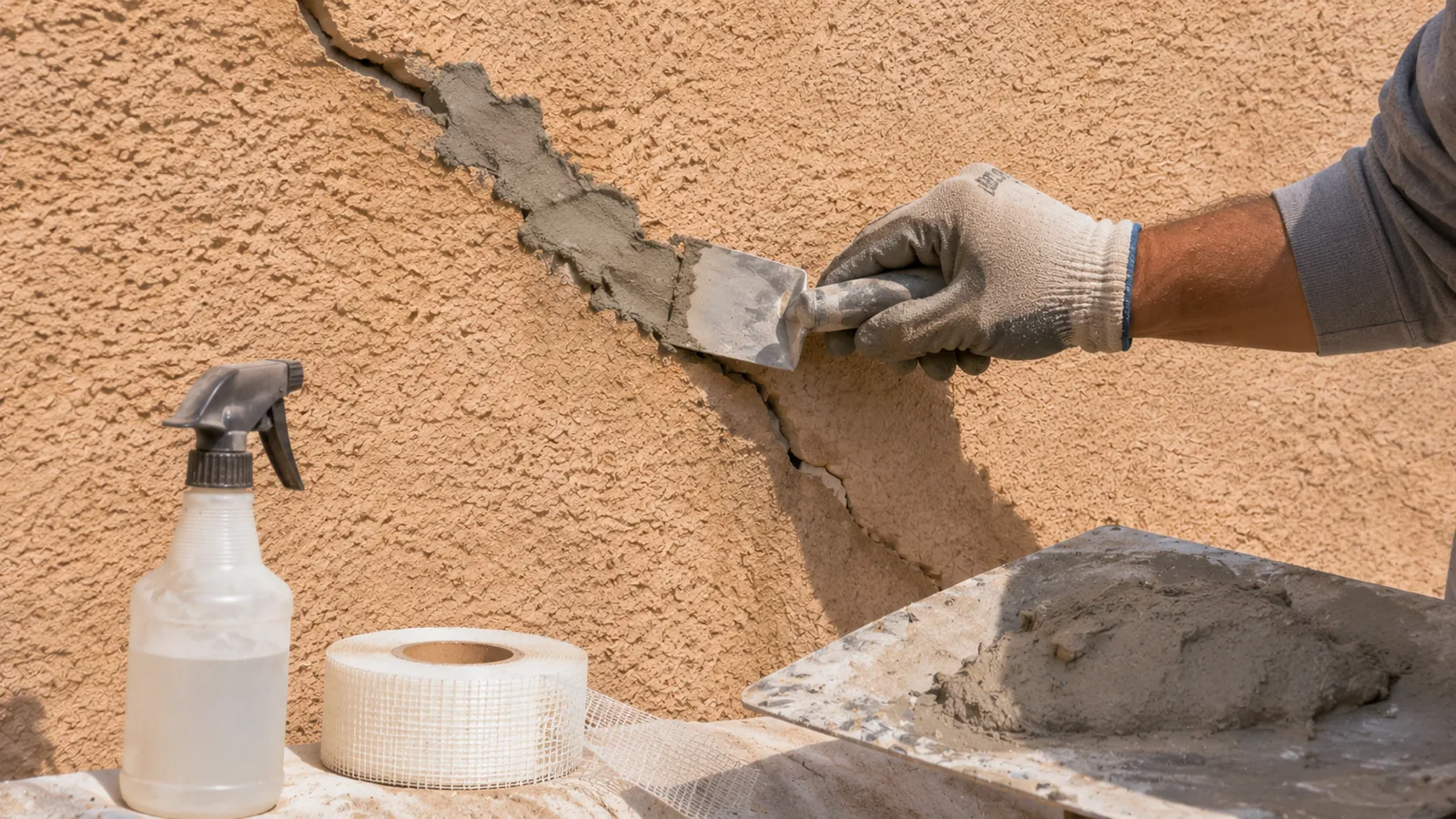
A simple way to track a crack
Put a small pencil mark at each end of the crack with the date. Check after the next season or the next big storm. If it's grown past your marks, it's moving and it's time for a closer look.
When you're ready, see how we repair stucco cracks.
Questions we hear
Should I fill a crack myself?
A hairline crack can be sealed with a quality exterior acrylic sealant as a stopgap. Anything wider or recurring needs a proper repair.
Are new-house stucco cracks normal?
Some hairline shrinkage cracking in the first year or two is common. Large or growing cracks on a new home are worth reporting to the builder.
Do cracks let water in?
Yes. Even hairline cracks let wind-driven monsoon rain in, which is why sealing them matters here.