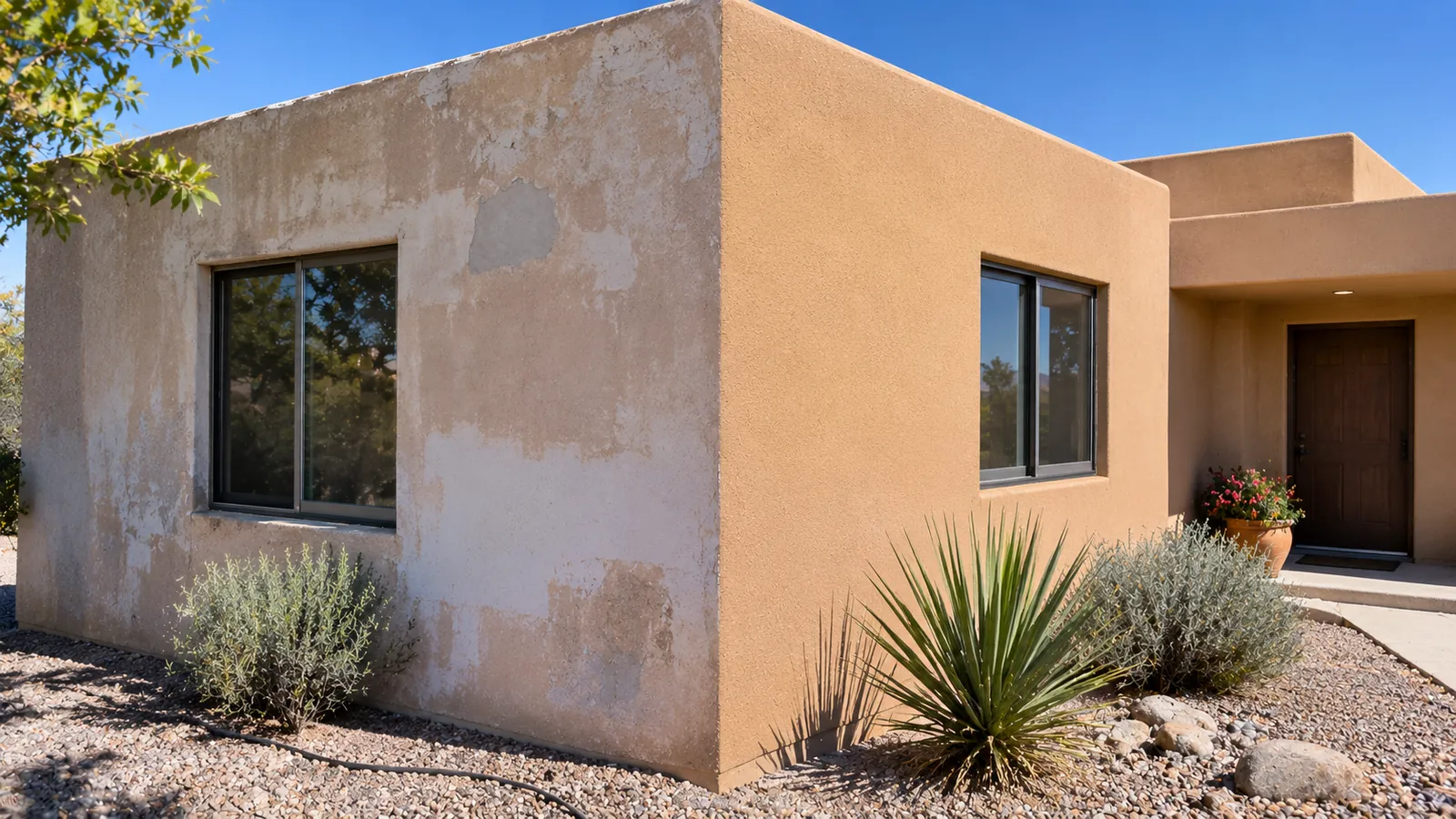
Why stucco fades unevenly here
At Albuquerque's altitude, UV is strong year-round. South and west walls fade first and fastest, so a house that started out one color often ends up as three shades of it. Add a few old patches mixed to the original color and the house looks blotchy even though the stucco itself is fine.
Option 1: a cementitious color coat
A traditional color coat is a thin finish layer of colored stucco applied over sound existing stucco. It renews the texture and the color at the same time, breathes like the rest of the wall, and hides old patches. It's the natural choice for traditional cement stucco homes that need a refresh.
Option 2: an acrylic finish
Many newer homes have an acrylic (synthetic) finish over a cement base. These are recoated with a compatible acrylic finish that holds color well and stays a bit flexible. We don't put rigid cement finishes over acrylic.
Option 3: elastomeric coating
Elastomeric is a thick, rubbery acrylic coating that's rolled or sprayed on in heavy coats. It stretches, so it can bridge hairline cracks and keep wind-driven rain out. On a wall covered in fine map cracks, it can be a great answer.
It has a trade-off: elastomeric breathes much less than stucco. On a wall that's already holding moisture, sealing it in can make things worse. We check for moisture and drainage problems first and only recommend elastomeric where the wall is dry and sound. More detail in our elastomeric guide.
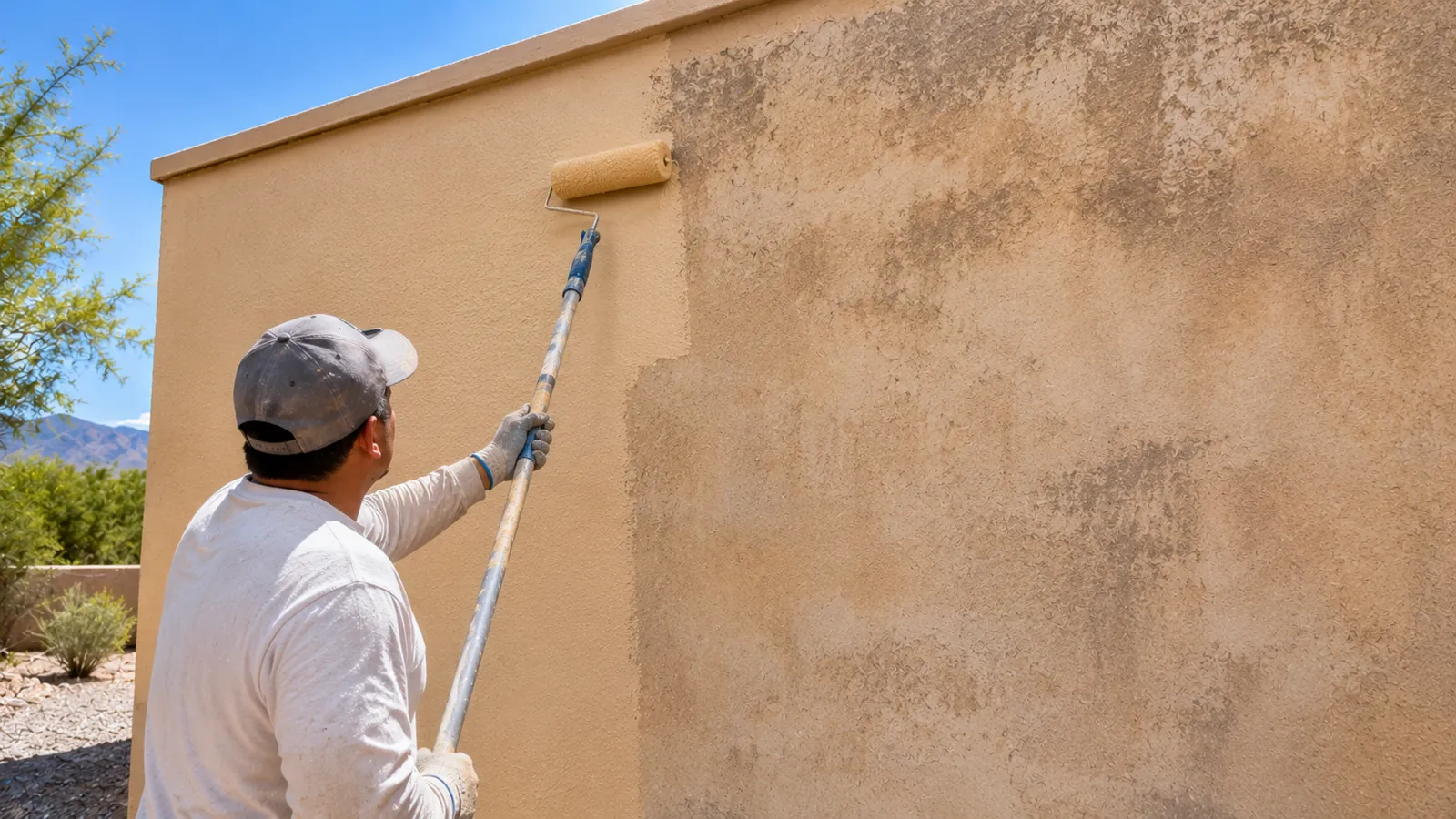
How we do it
- Wash the walls and let them dry.
- Repair cracks and patches first, and let repairs cure.
- Protect windows, roof edges, fixtures and plants.
- Apply the finish in the right thickness for the product, working wall by wall so each one finishes evenly.
- Walk the house with you when it's done.
Picking a color
Albuquerque homes look best in earth tones: sand, adobe, light tan, warm white, buff and soft gray. Light colors stay cooler in summer and show fading less over time. If your home is in a neighborhood with design rules, we'll work from the approved palette. We put test swatches on your actual wall so you see the color in our light, which is very different from a paint chip under a store's fluorescent lights.
Questions we hear
How long does a new color coat last?
It depends on the product, the exposure and how well the wall underneath is maintained. A color coat over sound stucco on a well-drained wall lasts many years.
Is elastomeric better than a color coat?
Not always. Elastomeric bridges fine cracks but breathes less. On a sound, dry wall with lots of hairline cracking it's a good choice; on walls with moisture issues, a breathable finish is safer.
Can you color-coat just one wall?
Yes. For a patch that won't blend, carrying the color across the whole wall to the corners is often the cleanest fix.